Stage 1
Start with a bounded non-emergency conversation or support step and a named accountable owner.
AI voice solutions
Care Voice AI is a product direction for voice-enabled conversations in care and support contexts. It begins with the fact that a voice interface can affect people, decisions and sensitive information, so usefulness cannot be separated from clarity, consent, escalation and human responsibility. The direction is not a claim of clinical capability, medical advice, safeguarding assurance, autonomous decision-making or a ready-to-deploy care product.
Product direction. Scope, maturity, availability, deployment model and fit are confirmed for each enquiry.
Discuss Care Voice AI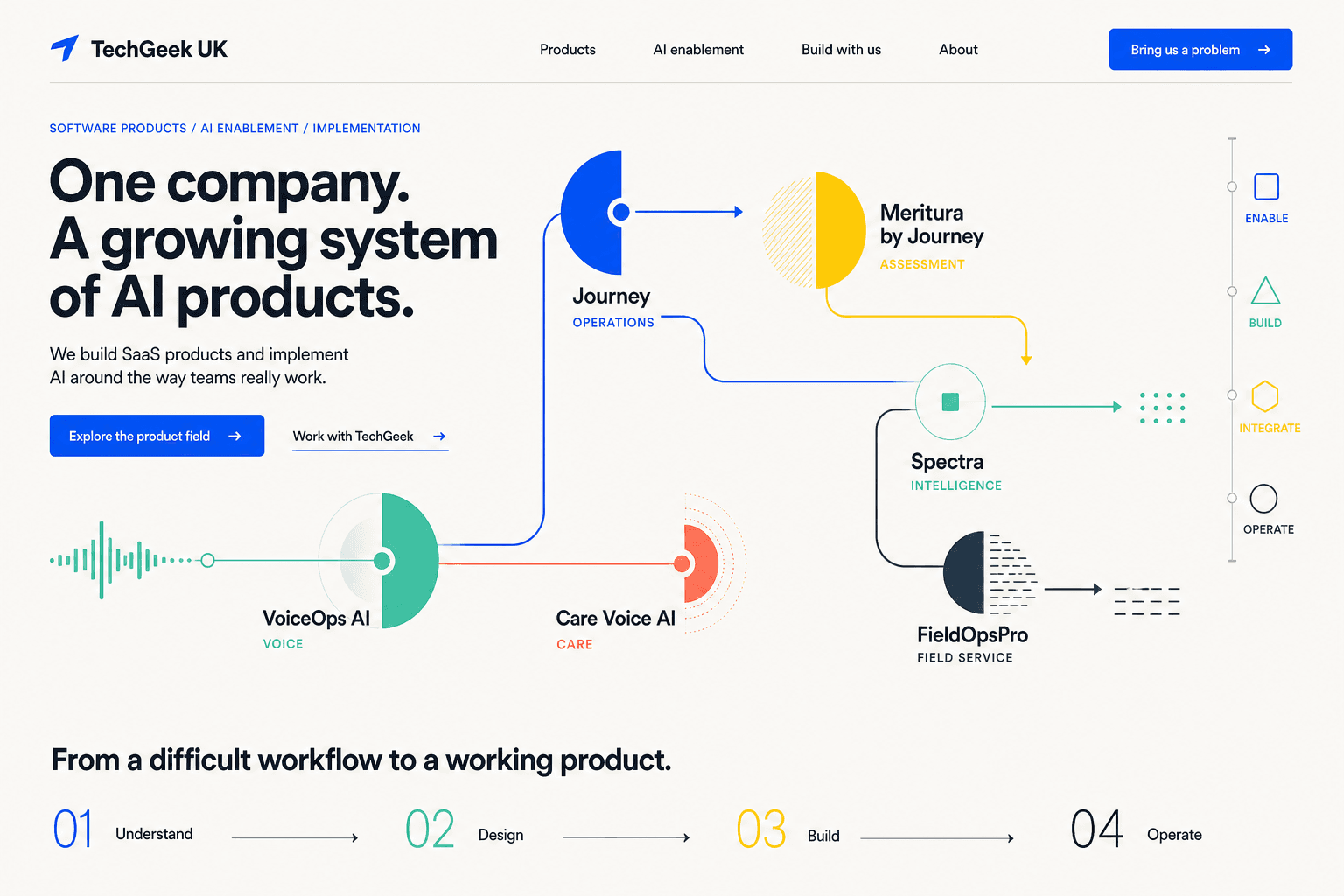
This public page describes a product direction, not an off-the-shelf capability promise. We first examine the workflow, users, system boundaries, current maturity and evidence required for a useful evaluation.
Audience and operating context
It may be relevant to care, support or service organisations considering whether a voice interaction could make a defined, lower-risk part of a conversation easier to access, record or route. Potential users include service owners, support teams, digital leads, operational managers and people responsible for quality or safeguarding. The first conversation needs to include the people affected by the workflow, not only the technology sponsor.
A team may face repetitive inbound questions, delayed follow-up, inaccessible information or an operational need to capture a request more consistently. Those are not automatically suitable for AI voice. The core problem is to distinguish the part of a conversation that can be safely assisted from the part that must remain with a trained person, a formal assessment process or an established safeguarding route. Care Voice AI explores that boundary before suggesting a voice workflow.
Workflow before feature list
A caller or service user starts with a clearly explained purpose and a route to a person where appropriate. The proposed voice workflow handles a bounded information, routing or capture step; it identifies when it cannot continue and directs the matter to the agreed human process. Staff receive only the context needed to respond, together with any disclosed uncertainty or exception. Before any pilot, the organisation would need to define the conversation scope, language and accessibility needs, consent basis, escalation conditions, record handling and owner of the human follow-up.
Architecture decisions
What information is appropriate to collect or disclose through the proposed voice interaction?
Is any personal, health, care, safeguarding or special-category data involved, and what is the lawful, operational route for it?
Where should a request, note or escalation be recorded, if at all, and which system remains authoritative?
What language, accessibility, call-quality, consent, retention and supplier constraints affect the intended interaction?
Control and assurance
What must trigger immediate hand-off to a trained person or existing emergency and safeguarding process?
How is the caller told what the system can and cannot do, and how can they reach a person?
Who reviews conversation exceptions, complaints, misrouting or unsafe outputs?
What evaluation and audit approach is proportionate to the potential harm of an error?
Evaluation
Can affected users understand the purpose and limits of the voice interaction?
Does the workflow route uncertainty and sensitive matters safely to a responsible human process?
Does it improve the defined operational step without suppressing context a person needs?
Can the organisation review errors, accessibility issues and exceptions before considering wider use?
Implementation route
Start with a bounded non-emergency conversation or support step and a named accountable owner.
Map user impact, data, consent, accessibility, escalation and existing human processes with relevant specialists.
Define evaluation scenarios, including ambiguity, distress, failure and hand-off, before building a pilot.
Run a controlled evaluation with explicit stop conditions; expand only if the evidence supports it.
What can be inspected now
The public record distinguishes product work that can be inspected from capability, availability or outcome claims that still need project-specific evidence.
Care Voice AI is publicly listed as a TechGeek product direction for care and support conversations.
The public product-system context distinguishes it as a care area, but does not evidence clinical, customer or production use.
TechGeek’s public responsible-AI material sets out general principles of proportionate controls, human review and workload-specific decisions.
No clinical validation, care-provider endorsement, safety case, customer deployment, care outcome or regulated status is published.
The name must not be read as a promise that the product can handle emergencies, diagnosis, safeguarding or health advice.
Care and voice workloads may involve sensitive data and vulnerable people; specialist input and project-specific governance are essential.
Direct answers
No. The public product direction does not claim clinical capability, diagnosis, medical advice or a regulated medical purpose.
It is not presented as an emergency or safeguarding decision system. Any proposed workflow must define and test the route to the organisation’s existing human and emergency processes.
No recording or sensitive-data handling model is implied. Those choices require explicit lawful, technical, operational and supplier decisions for the relevant context.
The review route must be designed around the particular conversation: what triggers hand-off, what information a person receives, who owns follow-up and how exceptions are learned from.
Include service owners, people responsible for the affected workflow, information-governance and safeguarding or clinical specialists where relevant, plus representative users where appropriate.
Maturity, availability and deployment suitability are confirmed per enquiry. The public listing is a product direction, not a general-availability announcement.
A practical next step
Bring the workflow, users, source systems, constraints and the evidence a first evaluation must create. We will confirm current capability, availability and the appropriate next step before proposing a delivery route.
Start a product conversation