The model is only one component
The product needs a clear workflow, interface, data boundary, integration path and operating responsibility. A model demonstration alone is not yet an AI-enabled application.
We design and build AI-enabled applications, agents, APIs and workflow systems without treating the model as the whole product.
Product design, engineering, evaluation and governance move together from the first architecture decision.
The product needs a clear workflow, interface, data boundary, integration path and operating responsibility. A model demonstration alone is not yet an AI-enabled application.
We need to understand who uses the output, what they can rely on, how uncertainty is handled and when a person can review, override or stop the workflow.
Before implementation, agree what will be checked: relevance, reliability, safety, latency, cost, user experience or operational effect. The appropriate balance is specific to the use case.
We can assess AI-enabled applications, agents, APIs and workflow systems where the product, integration, control and operating requirements are clear enough to plan responsibly.
The product should make uncertainty and exception handling usable: through evaluation, review paths, limits on automation and clear ownership. The exact approach depends on the decision and harm profile.
Provider selection is a project decision. We compare the workflow, data handling, service terms, capability, reliability, cost, integration and control requirements before recommending an architecture.
Situation signals
A model or vendor capability is available, but the organisation needs a usable product and operating model around it.
A workflow contains repeated judgement or context loss, and the team needs to decide what should remain human, automated or assisted.
The technical question spans interface, APIs, data, model behaviour, evaluation and deployment rather than a prompt alone.
Workstreams
We map the user action, decision context, inputs, outputs, exceptions and downstream consequences. This determines whether an AI capability is valuable, how it should appear in the interface and where a user needs explanation, review, override or a non-AI fallback.
The architecture may involve application services, APIs, retrieval, model providers, rules, integrations, queues, data stores and observability. We assess capability, latency, cost, reliability, terms, data handling and operating responsibility for the specific workload rather than treating provider selection as a branding choice.
Evaluation should reflect the decisions the product supports. Depending on the use case, it can include relevance, accuracy, robustness, safety, response time, cost, user experience and operational effect. Difficult or uncertain cases matter as much as examples that make a demonstration look good.
Identity, access, configuration, logging, monitoring, incident routes, release decisions and ownership are product requirements. The aim is not to imply that an AI system is infallible; it is to make limits and intervention paths usable for the people who rely on it.
Decisions and acceptance
The task the system assists and the human authority that remains.
The model, data, integration and interface boundary appropriate for the workload.
The evaluation criteria and release evidence that matter to stakeholders.
The operational owner for change, exceptions and ongoing improvement.
A documented workflow and product boundary.
An inspectable application or integration path checked against agreed test conditions.
Evaluation and operating notes that show limitations, review paths and next decisions.
Inputs and sequence
Users and product owners who understand the current workflow. Authorised data and integration context, including known restrictions. Decision-makers for product scope, risk trade-offs and release acceptance.
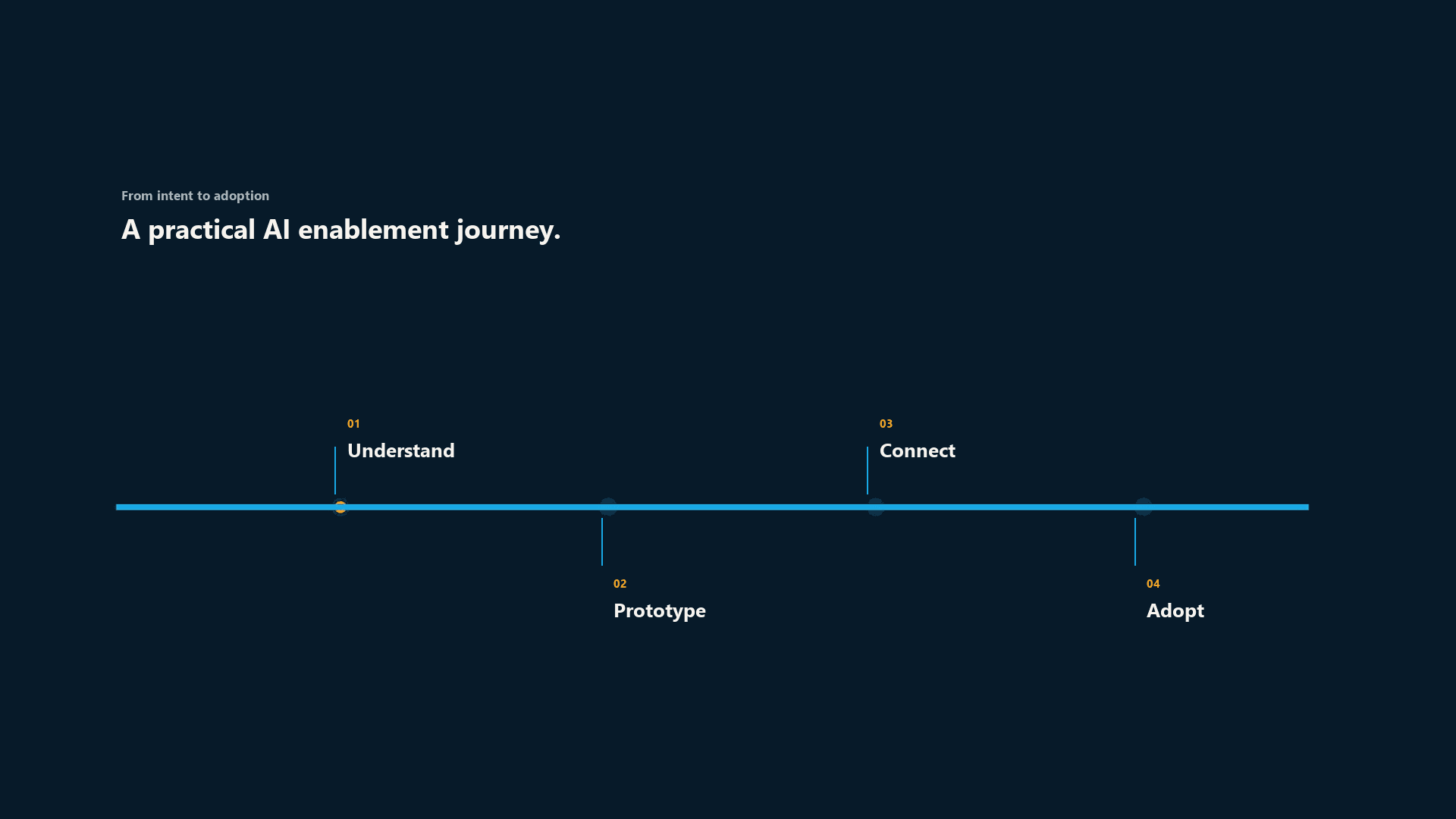
Understand the workflow and choose the smallest valuable product boundary. Design, build and evaluate the application and integrations together. Release through an agreed operating path and learn from real use.
Risks and limits
Model outputs can be uncertain, incomplete or inappropriate for a given decision; product design needs usable exception handling.
No provider, architecture or configuration is selected without project-specific trade-offs.
Technical delivery does not replace specialist legal, regulatory, security or data-protection advice where it is needed.
A useful first release can expose adoption, data-quality or support questions that must be solved through product and operating work, not model tuning alone.
Direct answers
We can assess agents, APIs and AI-enabled applications where the workflow, authority, integration and operating requirements are clear enough to plan responsibly.
Tests should reflect the actual use case: representative inputs, difficult cases, expected limitations, user review, integration behaviour and any reliability or latency conditions that matter to the release.
Provider selection is contextual. Capability, data handling, terms, integration, cost, reliability and controls are assessed against the particular workload before a recommendation is made.
Often the first task is to examine the existing workflow, data and product architecture. The useful change may be a narrow assisted step, not an attempt to rework every part of the product at once.
Tell us what must move, by when, and what access is available. We will assess fit before presenting a timeline.
Discuss the delivery