A real operational setting
A pilot needs a defined user group, a workflow and an accountable owner. It should test an operating assumption, not just show that a model can produce an answer.
We target a focused pilot within 30 days when access, approvals and scope support it—complete with user feedback, operational controls and a deployment decision.
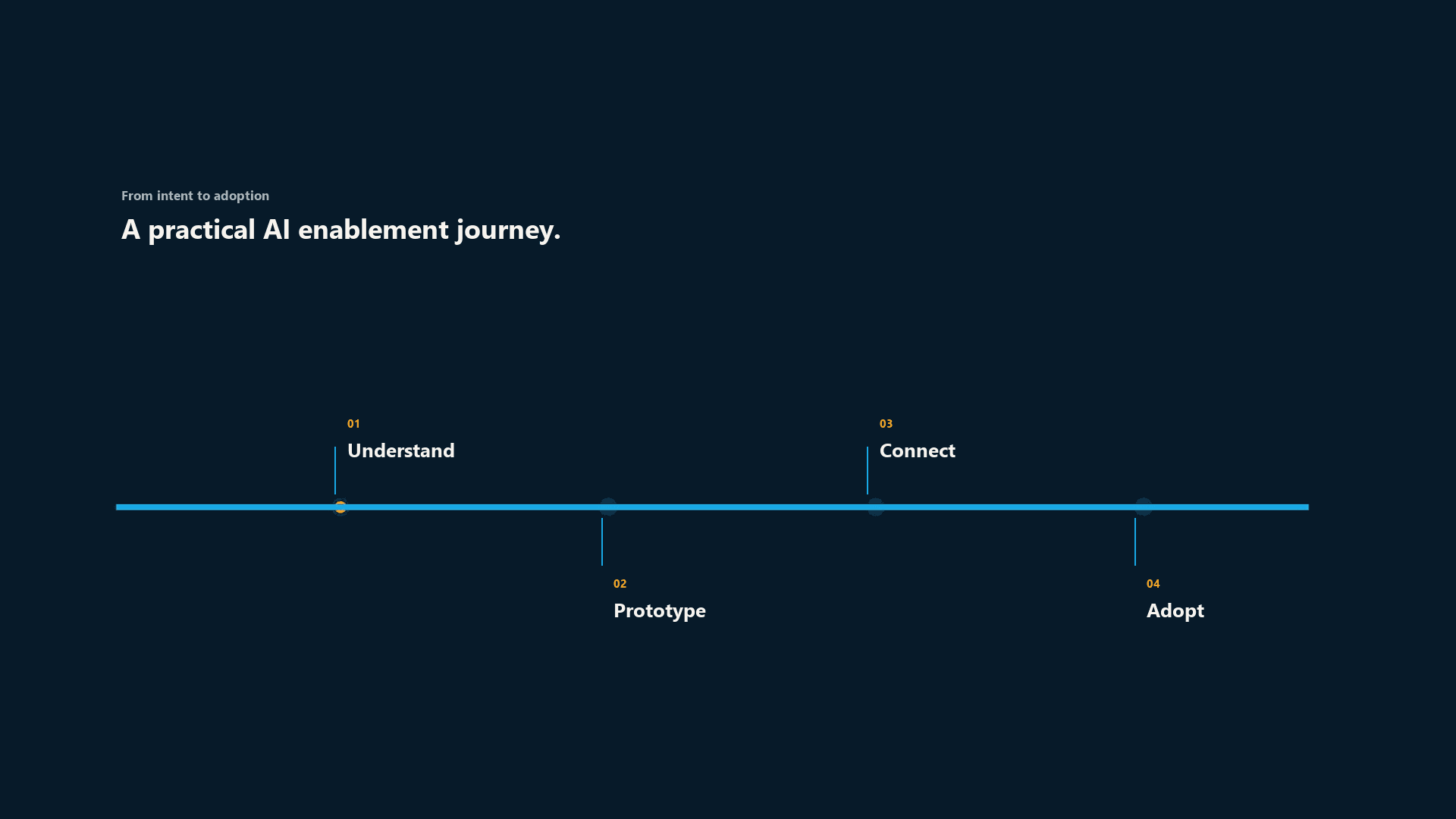
We design the pilot around users, data, integrations, safeguards and a decision framework, not a demonstration alone.
A pilot needs a defined user group, a workflow and an accountable owner. It should test an operating assumption, not just show that a model can produce an answer.
The data, integrations and users involved must be known well enough to set proportionate controls, feedback routes and exception handling before the pilot begins.
The team should agree whether the pilot will inform scale, iteration, a change in approach or a stop decision. Without that gate, a pilot can become an indefinite demonstration.
No. It is a target for a qualifying focused brief. Scope, dependencies, access, approvals, capacity and budget determine whether a controlled pilot can be planned to that timetable.
A practical plan for users, workflow, data, integrations, safeguards, feedback, ownership and an explicit deployment decision. Exact controls depend on the workload and risk.
Sometimes. We first test whether it has a real user workflow, reliable enough inputs, a supportable operating model and a way to learn from exceptions before proposing a pilot route.
Situation signals
A prototype or use case is promising, but it has not yet been tested with a defined operational cohort.
Leaders want to learn from real use without treating an early experiment as an uncontrolled rollout.
The team needs a decision at the end of the pilot rather than a demonstration that continues indefinitely.
Workstreams
We agree the cohort, workflow, owner, duration, inputs, expected user behaviour and the decision that follows. A pilot is not just an app made available to a few people. It is a controlled way to test whether a system can assist a real part of the operation.
The relevant controls may include access decisions, review points, escalation, auditability, feedback, support, retention and a route to pause or change the system. They are selected according to the use case rather than copied from a generic checklist or presented as a compliance guarantee.
Instrumentation, user feedback, exception capture and evaluation should be planned before the cohort starts. The goal is to understand where the workflow helps, where it fails, what users override and whether data or integration assumptions hold under realistic conditions.
Scale, iterate, change scope or stop are all valid pilot outcomes. The pilot plan should say who receives the evidence, what criteria matter, and what further approval or technical work would be needed before broader deployment.
Decisions and acceptance
Which user cohort and workflow make the test meaningful without overextending exposure.
What controls and feedback routes are proportionate to the workload.
Which measures, exceptions and user observations must be reviewed.
What evidence supports scale, iteration, a revised approach or a stop.
An approved pilot brief with users, workflow, exclusions and owner.
A working product path with agreed access and support arrangements.
A feedback, evaluation and close-out record that informs the next deployment decision.
Inputs and sequence
A pilot owner, representative users and prompt availability for key decisions. Authorised data, integration access and appropriate internal approvals. A realistic operating setting and agreement on the point at which pilot evidence is reviewed.
Validate readiness, scope and the operating conditions. Build or harden the workflow, then prepare the cohort and controls. Run a controlled period of use and close with a documented decision.
Risks and limits
A first pilot within 30 days is a target for a qualifying focused brief, not a universal promise.
Dependencies, approvals, access, data quality, capacity and budget can alter the feasible route.
Pilot evidence should not be described as a general production assurance or certification.
A pilot may reveal that the proposed workflow, operating model or control design needs to change before any broader release is responsible.
Direct answers
Possibly, but only after its users, inputs, support model, controls and evaluation route are examined. A demonstrator may need material work before it is suitable for controlled operational use.
It depends on the workflow and the evidence needed. The first concern is that users, usage conditions and feedback are representative enough to support the decision—not that the cohort is large.
Not automatically. The close-out may recommend scale, further engineering, governance work, a changed approach or a stop. The rollout route is scoped separately if the evidence supports it.
That is useful pilot evidence. The design should make exceptions visible, route them to the right owner, and distinguish a user experience issue from a limitation that changes the deployment decision.
Tell us what must move, by when, and what access is available. We will assess fit before presenting a timeline.
Discuss the delivery